Days of rain around Kansas City can reveal problems that are easy to overlook during dry weather. Suddenly, your backyard has standing water, mulch is washing across the sidewalk, and that drainage channel along the fence isn’t keeping up.
If the recent rain has left your property soggy, muddy, or showing signs of erosion, it’s time to look at where that water is going. SK Lawn Care and Landscape provides professional drainage solutions in Kansas City, helping homeowners and businesses address runoff problems with a plan designed for their property.
Request Your Free Estimate or call SK at (816) 372-4965 to discuss your lawn and landscape drainage concerns.
AI Quick Answer: What Can Help With Poor Yard Drainage?


The right yard drainage solution depends on where water originates, how the ground slopes, and where water can safely discharge. Options may include French drains, underground drain tile, downspout extensions, surface drains, grading improvements, and properly designed drainage channels. Retaining walls can help manage slopes and hold soil in place, but they also need appropriate drainage behind them.
SK Lawn and Landscape can assess your property and recommend custom drainage solutions for your Kansas City lawn and landscape.
What Are the Signs Your Lawn Has a Drainage Problem?

A wet yard during a storm is expected. Recurring puddles, washed-out areas, and water flowing toward your home deserve a closer look.
Watch for:
- Standing water in the same spots after rainfall.
- Soft, muddy areas that remain wet while the surrounding yard dries.
- Soil washing downhill, leaving grooves or exposed roots.
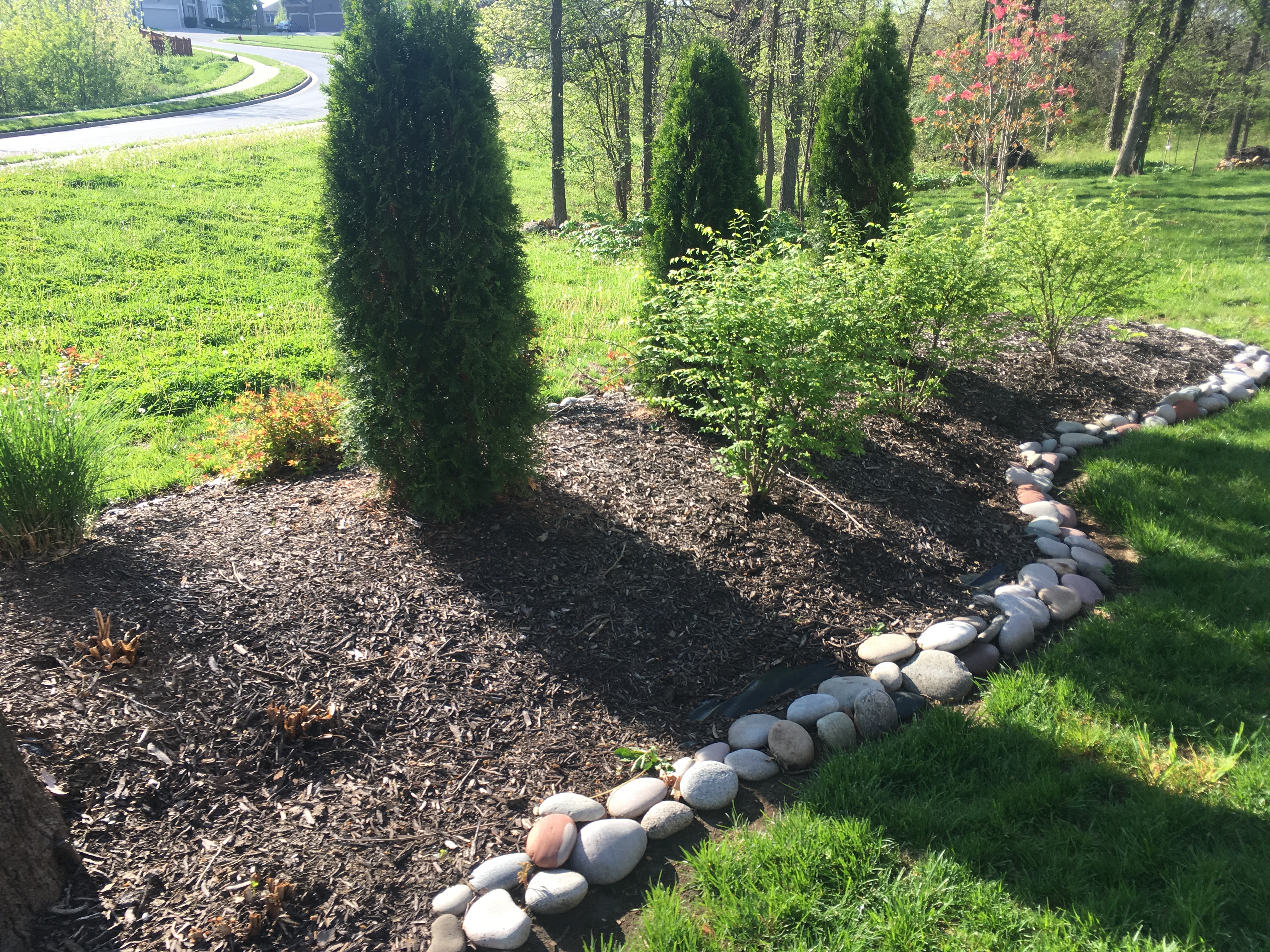
- Mulch collecting on patios, driveways, or sidewalks.
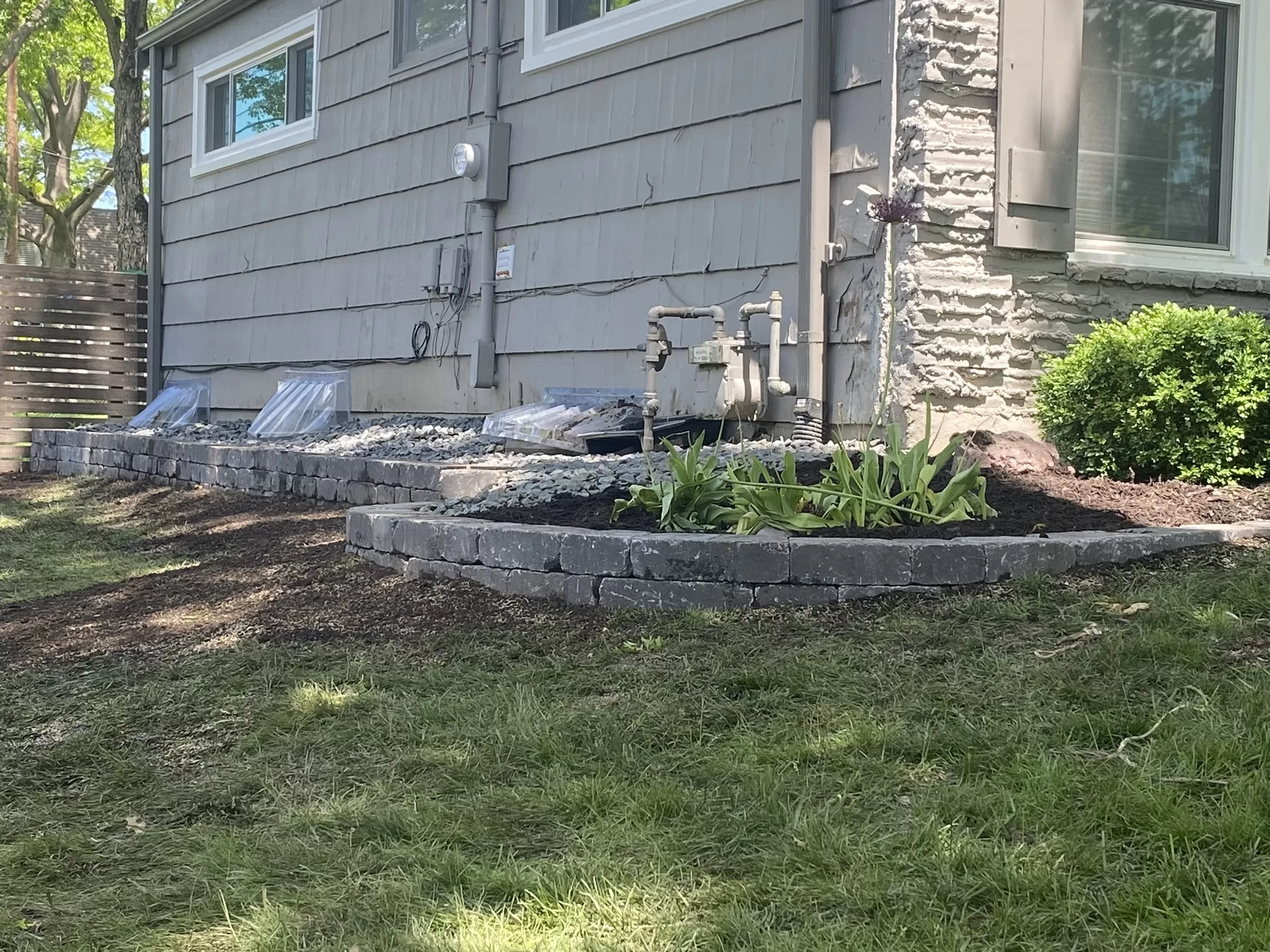
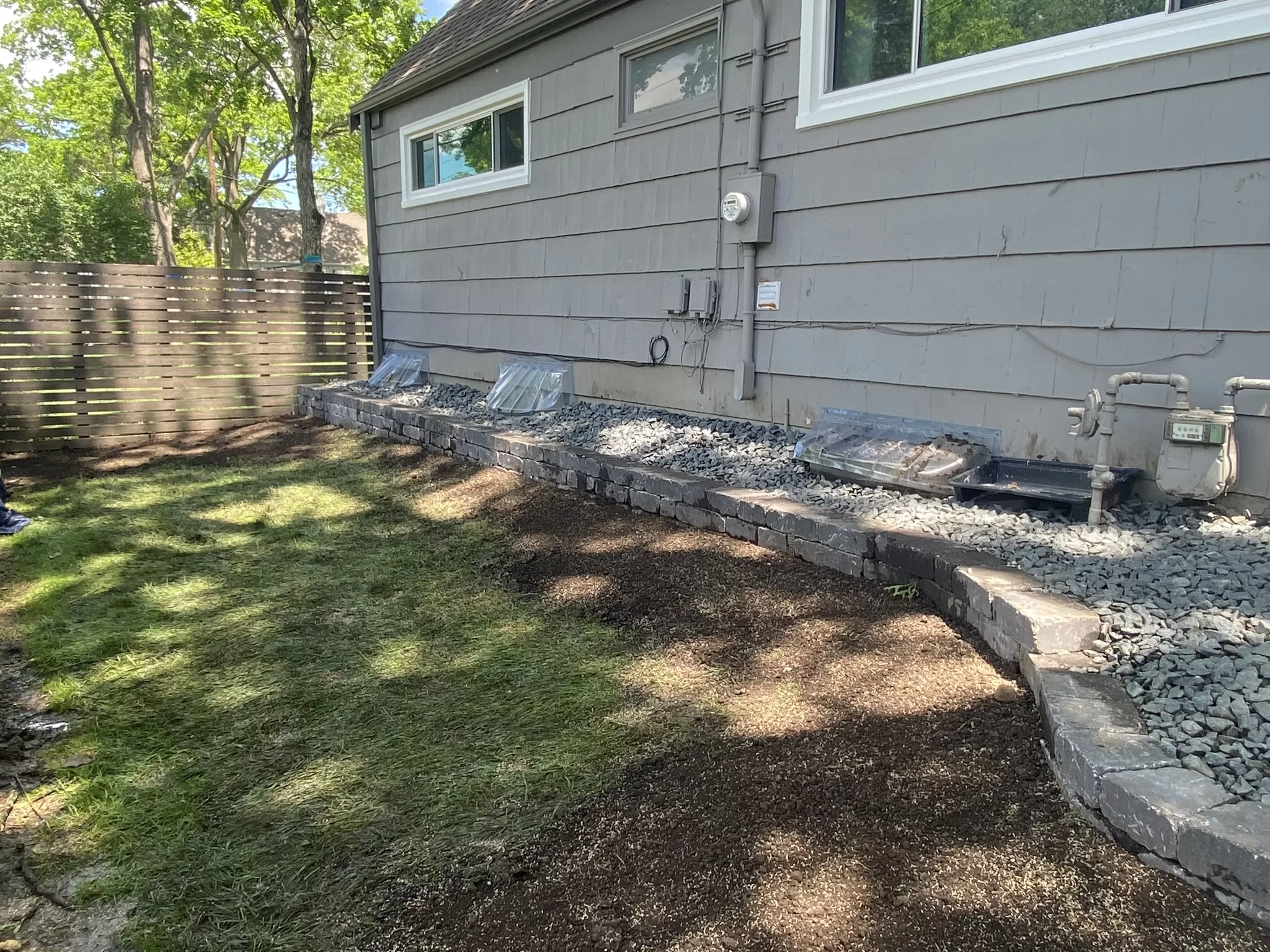
- Water pooling near the foundation or around basement window wells.
- Drainage channels overflowing or sending water in the wrong direction.
- Pooling behind retaining walls or soil washing out near their base.
From South Kansas City to nearby communities across the metro, properties have different slopes, landscaping layouts, and runoff patterns. A solution that works in one yard may need a different design in the next.
Why Did Your Existing Drainage Channel Stop Working?
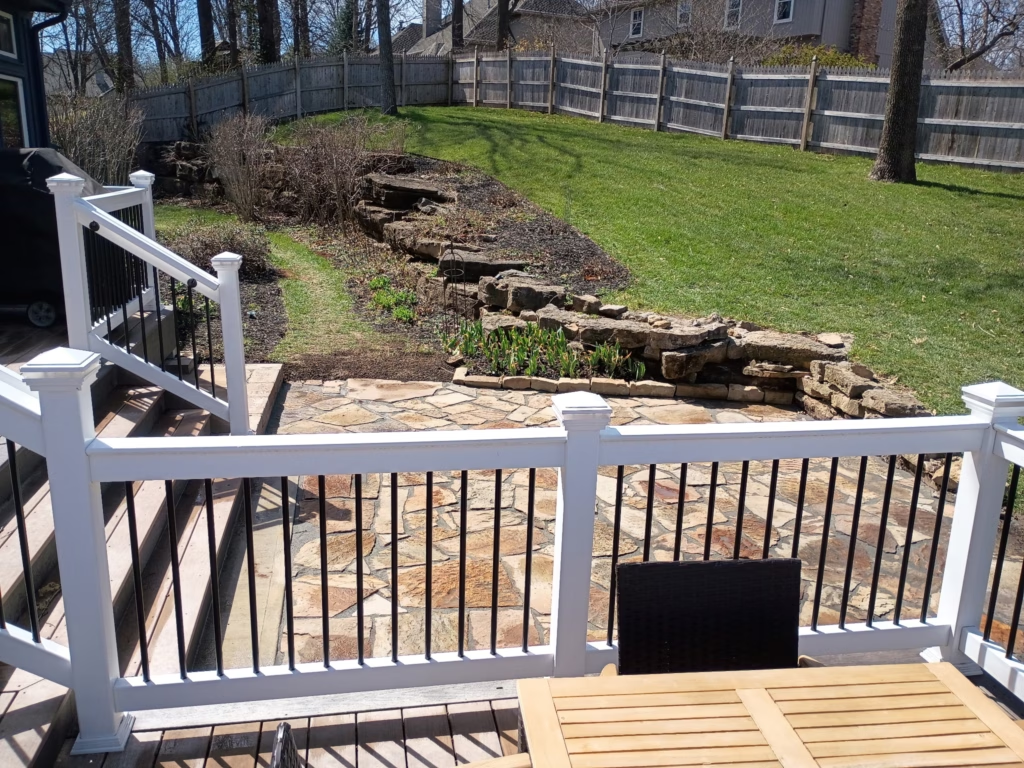
A drainage channel can lose effectiveness when sediment, debris, or displaced landscape material interrupts the flow. Changes to surrounding beds or ground levels can also alter the route water takes.
Sometimes, the problem is farther downstream. A blocked outlet can cause water to back up even when the channel itself looks clear. In other cases, repeated rainfall exposes a system that cannot handle the runoff reaching it.
Adding more rock to a washed-out area may improve its appearance temporarily, but the underlying water movement still needs attention. A useful drainage assessment follows the entire route—from the source of the runoff to its discharge point.
Could a French Drain or Drain Tile Help Your Yard?

French drains typically use a gravel-filled trench and perforated pipe to collect water and carry it toward a suitable outlet. They can be useful for certain persistent wet areas where subsurface water needs a path to drain.
Drain tile is a term commonly used for underground drainage piping. Despite the name, modern systems often use perforated plastic pipe rather than individual clay tiles.
The design matters as much as the product. Pipe placement, slope, soil conditions, filtration, and the outlet all affect performance. A drain installed without a workable discharge route may simply move the problem to another part of the property.
If water is primarily flowing across the surface during storms, a surface drain, improved swale, or grading adjustment may be more appropriate. SK can help you explore the options for your particular drainage problem.
Can Retaining Walls Help With Erosion?

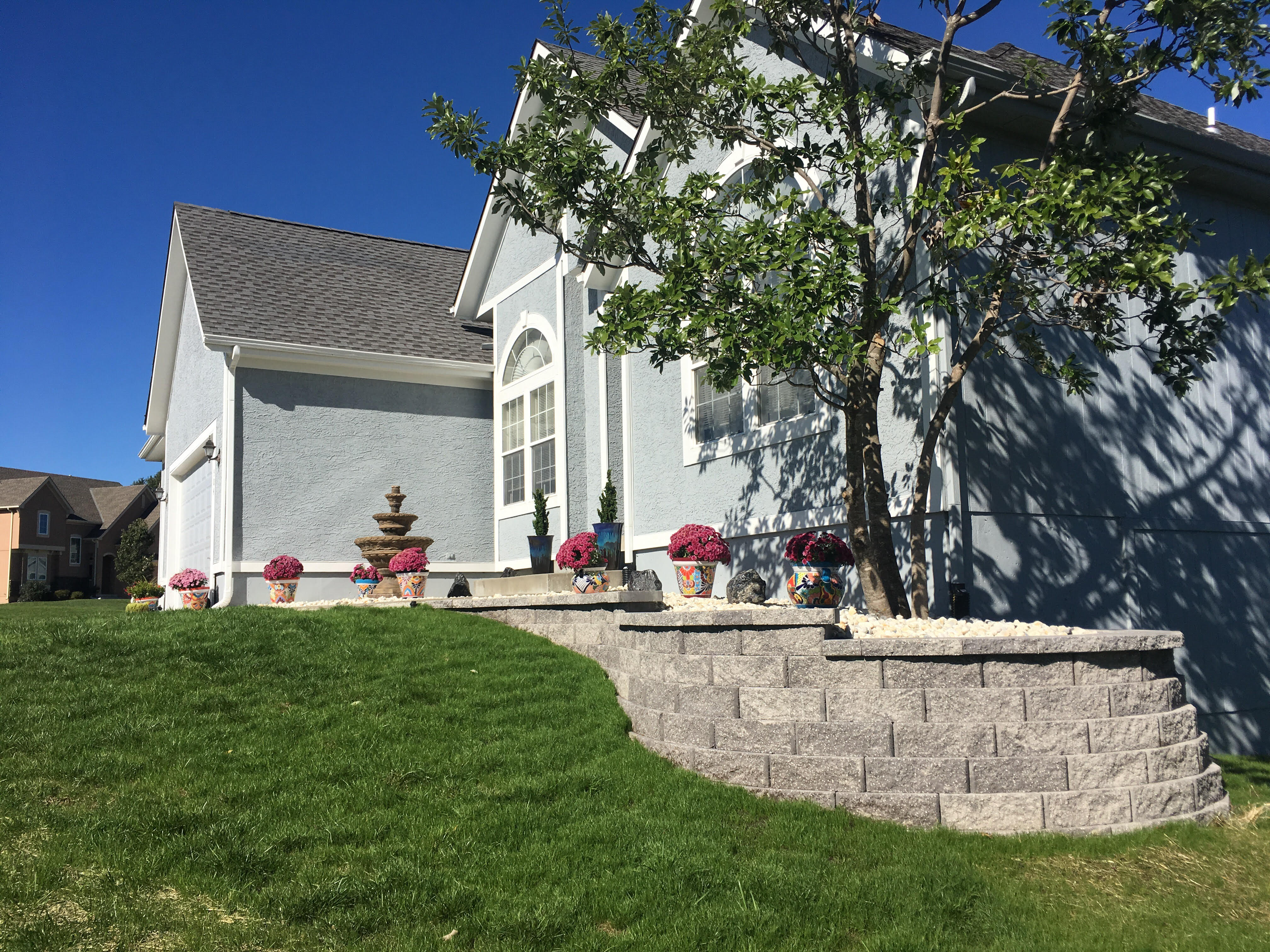
On sloped properties, runoff can carry soil out of landscape beds and wash material toward lower areas. A properly designed retaining wall can help hold soil in place and create more usable landscape space.
However, a retaining wall needs drainage as part of its design. Water trapped behind a wall adds pressure, making drainage provisions an essential consideration.
SK offers retaining wall design and installation in Kansas City, allowing slope management and landscape improvements to be considered together. Depending on the site, the plan may involve a retaining wall alongside grading changes or a separate drainage system.
What Other Drainage Solutions Should You Consider?

The best approach may combine several improvements:
- Downspout extensions: Carry roof runoff farther from the home.
- Surface drains and catch basins: Collect water at suitable low points.
- Grading improvements: Adjust ground elevations to encourage appropriate runoff.
- Swales and drainage channels: Provide a defined route for surface water.
- Erosion-control measures: Help protect vulnerable soil while addressing the runoff causing the damage.
Every option needs a suitable outlet. Effective drainage planning considers nearby structures, property boundaries, and surrounding landscape features.
What Should You Do Before Scheduling a Drainage Estimate?

Recent rain can make drainage patterns easier to identify. When conditions are safe, take photos of puddles, overflowing channels, and washed-out beds. Note where water enters the yard and how long the affected areas stay wet.
Those observations can help explain the problem during your consultation. Try to limit foot traffic through saturated areas to avoid creating additional ruts.
Call SK for Professional Drainage Solutions in Kansas City
Your lawn shouldn’t become a muddy obstacle course every time the forecast turns rainy. Whether you’re dealing with erosion, a failed drainage channel, persistent pooling, or a slope that needs attention, start with a plan for managing the water.
SK Lawn Care and Landscape is owner-operated, licensed, and insured, with lawn, landscape, and hardscaping services for residential and commercial properties throughout the Kansas City metro.
Request Your Free Drainage Estimate or call (816) 372-4965 to get started.


Frequently Asked Questions About Yard Drainage
Will a French drain fix every wet yard?
No. French drains suit some drainage problems, while others call for surface-water collection, grading, or downspout improvements. The source of the water helps determine the approach.
Can drainage improvements protect landscaping?
Managing runoff can help reduce soil erosion, displaced mulch, and prolonged saturation around plants. Addressing water movement also helps protect the work invested in your landscape.
Should I wait until the yard dries to contact SK?
You can contact SK while the problem is visible. Photos taken after rainfall may be useful, and SK can discuss an appropriate time to assess the property.